A client once told me she avoided smiling in photos because the crinkles at her eyes made her “look tired, not happy.” Three weeks after a light, well-placed dose of Botox, she sent me a photo from her friend’s wedding. She looked like herself, just rested. That shift is the real story here: not erasing time, but restoring comfort in your own skin so you move through your day without managing your face.
What Botox actually does to your facial muscles
Botox is a purified neurotoxin that blocks acetylcholine at the neuromuscular junction, which temporarily reduces muscle contraction. When a muscle cannot contract as strongly, the skin above it creases less. Dynamic wrinkles - the ones you see during expression, like the frown lines between the brows or crow’s feet at the outer eyes - soften first. Over time, if a line has been “etched” into the skin by years of movement, reduced motion lets the dermis remodel, and the etched lines can fade.
In practical terms, most doses take effect within 3 to 5 days, peak around 10 to 14 days, and gradually wear off over 3 to 4 months. That window can stretch to 5 or even 6 months for some areas or repeat users, often due to reduced muscle bulk and a habit change in how the face moves. It is reversible. If you do nothing after a single session, your muscles return to baseline function.
The science of wrinkles, in simple language
Wrinkles form because skin and muscle pull in opposite directions and because collagen weakens with age. Two types matter here. Dynamic wrinkles come from movement, like squinting. Static wrinkles are visible at rest. Early on, dynamic wrinkles dominate, so Botox is powerful. Later, when creases are etched, muscle relaxation helps but may need support from skin-directed treatments. That is the skin health connection: collagen, elastin, and hydration set the backdrop, while Botox modulates the motion that folds the backdrop.
I have treated many foreheads where a patient wanted a perfectly smooth sheet. You can do that, but the trade-off is a heavy brow or an unnatural shine-like stillness. Subtle dosing along the frontalis - the muscle that lifts the brows - keeps lift and softens grooves. This is the art of restraint and where facial muscle dynamics guide decisions.
Why confidence and self-image improve for many people
When you stop negotiating with your face every time you laugh, concentration looks less like anger. When your resting brow reads neutral, not worried, people respond differently, and you respond to them with more ease. It is not the frozen face myth; it is strategic muscle relaxation that preserves your natural facial movement while reducing visual noise. I watch patients go from checking every reflection to forgetting about it. That mental bandwidth is a form of confidence.
There is also a feedback loop between expression and emotion. While Botox is not a mood treatment, it can interrupt the habit of frowning, which can shift how often you catch yourself in a tense expression. Small changes in your own mirror feedback add up. The goal is not a new face. It is a more honest match between how you feel and how you look.
Myths that still confuse patients
People still arrive worried they will look frozen, they will feel numb, or their cheeks will droop. Numbness does not occur; sensation travels through different nerves. Drooping can happen if product diffuses into a lifting muscle, an avoidable risk when placement is careful. The frozen look comes from overdosing or treating the wrong muscle map. Natural results depend on targeted doses, conservative treatment plans, and a willingness to leave a line or two of expression. It is possible to have Botox for softening, not freezing, and still feel fully you.
Another myth is that Botox thins skin or “ages you faster” if you stop. Skin aging is driven by time, genetics, sun, and lifestyle. If you stop, your muscles resume their typical strength and wrinkles return to your personal baseline, often a touch softer than before due to months of reduced folding. There is no rebound damage.
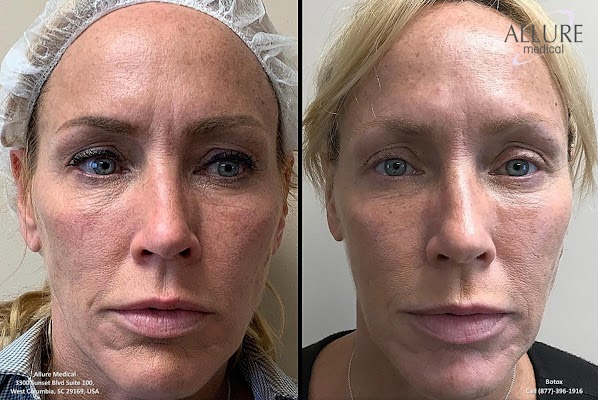
How Botox fits into modern aesthetics without looking “done”
Trends have shifted. Ten years ago, many clinics chased the movie-still forehead. Today, most of my new clients ask for subtle aesthetic enhancement that looks like better sleep, not plastic perfection. The modern botox treatment philosophy leans minimalist: plan a map, test with modest units, then refine at the two-week check. Less product, better placement, and a measured plan bring long term facial maintenance that does not chase the last millimeter of smoothness.
This is where facial harmony principles matter. Treating a single area can pull attention to another. If we soften the 11s between the brows but ignore strong down-turners at the mouth, expressions can feel uneven. Balanced facial aesthetics mean matching upper face and lower face messages so you keep natural beauty goals intact.
The first-timer experience, explained without jargon
If you are new to cosmetic treatments, know the session is quick. A typical first visit is 30 to 45 minutes including consultation. The injections take minutes. Most people describe them as brief pinches. Makeup can be applied after a few hours, and you can return to work the same day.
Expect a medical history review, photos for planning, and a conversation that covers realistic expectations. I will ask how your face feels when you are tired, which lines bother you most, and what expressions you want to preserve. I mark facial mapping points with a white pencil and assess how your muscles fire by asking you to raise the brows, frown, and smile. For beginners who want subtle results, we start low. If in doubt, we under-treat and schedule a refinement at day 10 to 14.
Preventative Botox and when to start
People often ask for a number. Is it 25, 30, 35? The better answer is: start when you see lines at rest that persist for hours after expression or when early signs of aging make you change your behavior, like avoiding bright light because squint lines stay. For some, that is the late 20s. For others, the mid 30s.
Preventative botox means small doses to discourage deep etching. It is not a badge of youth; it is a strategy for graceful aging. Skin type plays a role. Fair, thinner skin tends to show lines earlier. Oilier or thicker skin may resist etching but can display stronger muscle bulk. Planning based on age and skin type helps determine whether the priority is forehead control, crow’s feet softening, or managing the frown complex.
Where Botox helps the most
Three common zones respond predictably. The glabella between the brows controls frowning. When treated well, it reduces the heavy or stern look. The lateral canthus at the outer eye softens crow’s feet while leaving the sparkle of a real smile. The forehead controls brow lift. Here restraint protects brow position. Secondary zones include bunny lines at the nose, the downturned corners of the mouth via the depressor anguli oris, dimpling of the chin, and vertical neck bands.
Each zone has a dose range. For example, glabella units might range from the teens to the low twenties depending on muscle strength and sex assigned at birth. Forehead units are typically lower to preserve lift, sometimes in the single digits for a narrow band approach. Doses are adjusted over sessions as we learn your muscle memory.
The balance between movement and smoothness
Faces tell stories. The trick is to mute the parts of the story you do not mean to tell. For most people, the sweet spot is visible expression lines when you exaggerate - like a big laugh - but less folding during everyday conversation. That is the restraint that protects natural facial movement. I often leave the outer lateral fibers of the orbicularis oculi slightly active so smiles do not flatten. Similarly, I keep small islands of frontalis activity to avoid a “blank forehead” that reads artificial in bright light.
Botox and facial expression balance becomes a calibration process. Early sessions are data gathering. Later sessions dial in the map so results remain consistent year over year.
Planning for long term wrinkle management
Good results come from a plan, not a one-off appointment. The plan includes intervals, units, and adjuncts for skin quality. Most people schedule every 3 to 4 months. Some stretch to twice a year by accepting a small dip in smoothness between visits. Over time, repeated relaxation builds muscle memory. You may need fewer units because the muscle reduces in bulk slightly and your habitual movements soften.
Lifestyle affects durability. Intense exercise, high metabolism, and high facial expressivity can shorten duration by a few weeks. Sleep, sun protection, and topical retinoids support results by improving the skin’s repair and collagen. Hydration and stress control help too, not because they “extend Botox” in a direct way, but because they steady the variables that make skin look creased or deflated.
Customization for individual faces
Aesthetic balance is personal. A strong frontalis on a tall forehead needs different mapping than a compact forehead with low-set brows. Ethnic and anatomical differences also matter: brow shapes, hairlines, and midface structure alter how lift reads on the face. We also discuss job and lifestyle. Actors, teachers, and public speakers often want more motion preserved. New parents who sleep less may prioritize a refreshed look in the upper face.

I build plans that label each zone with a goal: soften, preserve, or protect. If a client loves her expressive eyebrow lift, we protect it. If she feels her inner brows create an angry line during focus, we soften it. If her crow’s feet make every smile look scrunched, we target those outer fibers carefully. This is Botox customization for individual faces, not a standard template.
Realistic expectations explained
Botox cannot lift skin like a surgical procedure, fill volume like hyaluronic acid, or change skin texture the way lasers can. It does not erase sun damage. It can soften dynamic lines and blunt the formation of new etched lines. Expect a smoother surface during expression, less tension at rest, and a lighter, refreshed appearance.
Two timelines guide expectations. First, the early phase. Within a week, movement reduces. Around two weeks, the result is stable. Second, the wearing-off phase. The first hint of motion returns around two to three months, then accelerates. Planning for this arc gives you control over consistency.

How facial aging patterns inform dosing
Faces age along predictable vectors: descent at the outer brow, lengthening of the upper lip, deepening of the nasolabial fold, and increased activity of muscles that pull down at the corners of the mouth. If we paralyze the lifting frontalis too much while lateral brow support wanes with age, we risk a flat brow or a hooded look. Moderation solves this. We keep just enough forehead activity to maintain a gentle arch while controlling lines. In lower face treatments, dosing is cautious to avoid mouth dysfunction while lifting the mood of the smile.
When I assess a new patient in their 40s or 50s, I weigh what lines are movement-driven versus volume-driven. A lower face line from tissue descent is a filler or skin tightening conversation. A strong frown crease is a muscle issue. Matching tool to cause anchors realistic outcomes.
A note on muscle memory over time
Repeated neuromodulation reduces overactive patterns. Think of it like retraining a shrug that once lived in your brow. After a year or two of consistent sessions, many people need fewer units or can space out visits. This is not guaranteed, but it is common. The muscle no longer over-recruits for every expression. That is partly because the muscle gets a bit smaller, and partly because your brain stops sending the same intensity of signal for certain micro-expressions.
The art of restraint during refinement visits
I encourage a two-week follow-up, especially for first-timers. It is the moment where we decide if a small tweak will perfect symmetry or if leaving asymmetry is more natural. Perfect symmetry botox near me alluremedical.comhttps can look strange. Faces are asymmetrical by design. A tiny lift difference in the brows can add character while still reading rested. Refinement does not mean adding more everywhere. It means touching the right fiber and stopping.
The role of skin health in making Botox look better
The canvas matters. Retinoids stimulate collagen turnover. Vitamin C supports collagen and brightens. Daily sunscreen prevents collagen breakdown. A hydrated stratum corneum makes the skin reflect light more evenly, which visually smooths. When these basics are in place, Botox’s impact amplifies. Without them, muscle control may be strong but the skin still looks dull, and etched lines remain stubborn. Pairing neuromodulation with topical care and, when needed, energy-based modalities builds a long term plan.
Botox for natural results: small choices that add up
Micro-dosing around the outer canthus can preserve a crow’s feet twinkle while taking the strain out of squinting. Sparing the medial frontalis can preserve lift while softening the center. Treating the depressor anguli oris lightly can hint a friendlier corner-of-mouth without affecting speech. Small, thoughtful moves maintain youthful expressions. The aim is not to hide age but to age without harshness.
Planning your first session: a simple checklist
- Prepare a three-point priority list: the one feature that bothers you most, one you are unsure about, and one you want to protect. Avoid alcohol, blood thinners if medically appropriate, and strenuous workouts 24 hours before and after to minimize bruising. Take clear photos in good light while making expressions you dislike. Bring them to the visit. Expect results to appear over 3 to 14 days and schedule a 10 to 14 day review before a major event. Budget for maintenance every 3 to 4 months, adjusting based on your metabolism and goals.
When subtlety is the goal for first timers
New clients who want to “test the waters” do well with crow’s feet or the frown complex first. The forehead, while common, requires the most restraint to avoid brow heaviness. If trust is still building, split the plan: treat crow’s feet now, re-evaluate in two weeks, then treat the glabella. Seeing the face evolve gradually helps align expectations and reduces fear of looking “done.”
Side effects, safety, and choosing a provider
Common side effects are mild: small bumps at injection sites that fade in minutes, a low chance of bruising, occasional headache in the first day or two. Rare events include brow or eyelid ptosis if product migrates, which usually improves over weeks. Tell your provider if you have neuromuscular disorders, are pregnant or nursing, or have had prior reactions. Proper dilution, precise placement, and conservative dosing keep risk low.
Experience matters, but so does listening. A provider should ask about your expressions, your job, your event timeline, and your tolerance for risk. They should show restraint, offer a follow-up plan, and explain trade-offs in plain terms. The most natural result comes from collaboration, not a one-size-fits-all map.
Botox and modern beauty standards
Public perception has broadened. Many patients no longer seek to erase every sign of age. They want a refreshed appearance that aligns with lifestyle and identity. Subtle rejuvenation goals do not fight time; they remove the static. The future of anti aging looks personalized: nuanced dosing, combination therapy for skin health, and plans that adapt to seasons, stress, and hormonal shifts. The aesthetic balance explained in consults now includes mental well-being and the permission to keep features that make you distinctive.
How I time treatments through the year
Busy seasons matter. Teachers often come in early summer, trial a gentle map, then refine before the school year. Brides or grooms should finish their last tweak at least two weeks before the event. Athletes may notice a slightly shorter duration due to metabolism and heat exposure, so we plan around competition schedules. Winter skin can look drier, which makes lines more visible; pairing neuromodulation with hydration and barrier repair helps maintain a refreshed look even when the air is harsh.
What improvement looks like in numbers
Patients often ask what percentage change to expect. While everyone is different, many see roughly 30 to 70 percent softening of dynamic lines in treated zones, with the best results where muscles strongly drove those lines in the first place. Etched lines at rest can improve modestly in the first cycle and more over subsequent cycles as the skin stops folding as often. Collagen does not rebuild overnight, so patience across several sessions pays dividends.
A practical approach to maintenance budgets
Consistency beats intensity. A moderate plan you can sustain for years often outperforms heroic doses once a year. I would rather see you quarterly for smaller, well-placed units than cram a year’s worth into one visit that fades unevenly. If budget is tight, prioritize the area that changes your facial message the most - commonly the frown complex - and maintain that reliably. Add the forehead or crow’s feet when feasible. This protects facial harmony while honoring real-world constraints.
Where Botox does not help, and what to do instead
Under-eye hollowing is a volume issue, not a muscle issue. Nasolabial folds deepen with descent and volume loss; Botox plays a minimal role there. Rough texture, pigment, and enlarged pores respond to skincare, peels, or energy devices, not neuromodulation. A trusted provider will say no when Botox is the wrong tool and point you to evidence-based alternatives.
The small signals that tell us we got it right
When clients stop requesting mirror checks and start telling stories about their week, we are on track. When a partner says, “You look rested,” not “Did you do something to your face?” that is success. When makeup sits smoother with less settling in lines and you feel less need to control your expressions in photos, the plan is working. Confidence shows up in those quiet, daily wins.
A compact guide to dosing philosophy
- Start low, map smart, and refine at two weeks. Protect lift in the forehead to avoid heaviness. Balance pairs: glabella with forehead, crow’s feet with cheek dynamics, mouth corners with chin. Respect asymmetry rather than chasing perfect symmetry. Use adjunct skin care to improve how Botox reads on the surface.
Final thoughts from the chair
Botox is not a personality transplant. It is a tool that manages movement so your face tells the story you intend. Done with restraint, it preserves natural expressions, supports long term wrinkle management, and brings a refreshed look that matches how you feel. The most meaningful outcome is not the absence of a line. It is the sense of ease when you stop thinking about your face and start engaging more fully with the moments in front of you.
If you are curious, begin with a conversation. Bring your priorities. Ask for a plan that fits your features, your skin, and your life. Confidence grows when your reflection feels familiar again, just a touch lighter, like you after a good night’s sleep.